


Oops! We could not locate your form.
BACK TO TOP ↑
Consider Staying Invested During Volatile Markets

2022 has been an excellent demonstration of just how volatile markets can be. The bear market in the early part of this year was followed by a rally, with volatility-related ETF and ETNs plunging from June highs. Your MoneyDo for this week: consider all your investment options when facing volatility, including staying invested.
When it comes to investing, many have heard the adage “Be fearful when others are greedy, and greedy when others are fearful.” The advice seems to be advising to “zig” when the rest “zag,” encouraging a contrarian view of general investor sentiment and activity. While being a contrarian might include selling when others aren’t, another contrarian option may be simply staying invested.
Staying invested during volatile markets is often easier said than done. Many times, to avoid potential future losses, investors will sell out of their positions on the way down in an effort to “stop the bleeding.”
There are two main psychological phenomena at play in these types of situations: Negativity bias and loss aversion. Negativity bias refers to the fact that we, as human beings, have a tendency to focus on negative news and events more than their positive counterparts. Loss aversion is something uncovered by award-winning economists Daniel Kahneman and Amos Tversky. It is the theory that losing hurts approximately twice as much as winning feels good. In other words, “losses loom larger than gains” (Kahneman & Tversky, 1979).
The fact of the matter, though, is that trying to time the market is quite difficult. The reason for this is that it requires one to be correct twice: Once when deciding when to sell and get out of the market, and another when deciding to get back into the market and redeploy capital.
Most investors cannot perfectly time the tops and bottoms in the markets given the slew of data, microeconomic and macroeconomic factors, geopolitical factors, and different investor psychologies that play into the movement of asset prices.
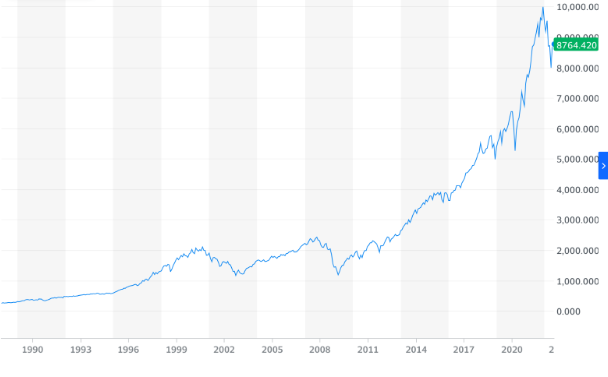
For many, a healthy approach to investing is simply staying invested in the markets, even in times of volatility. Over the long haul, despite wars, global health crises, financial crises, recessions, and the like, markets tend to march higher (see chart below).
Additionally, investors who move their holdings to cash often miss rebounds when the market starts to come back. Lastly, some of the best single day returns in the equity markets occur during bear markets and missing these days can reduce the average annual returns one sees in their portfolio.
Application/linkage to reader: It is important to find an advisor who can provide education and guidance around why having a long-term perspective tends to be beneficial when it comes to both portfolio management and financial planning. By allowing a team of professionals to work alongside you in constructing a portfolio designed for the long-term, it helps to eliminate the behavioral biases that get in the way of so many individual investors
BACK TO TOP ↑
Annex Wealth Management’s Randy Winkler, CFP® answers several Ask Annex questions:
“Do break-even calculations for social security tend to work out?” – Ben
“Does my paid-off house count when it comes to my financial plan?” – Kyle
“What portion of my portfolio should be liquid and in what form?” – Ray
“What do you see more of, people who regret retiring early or late?” – Joyce
“Please explain the 4% rule.” – Anonymous
Do you have a question for Annex Wealth Management? Drop it here: annexwealth.com/ask
BACK TO TOP ↑

BACK TO TOP ↑
BACK TO TOP ↑
UPCOMING EVENTS →
BACK TO TOP ↑